How My Hobby App Inspired a Feature in My Favorite Word Game
When I began my career break last September, I made a loose “no coding” rule for the first few months. I wanted to decompress, explore some new hobbies, and come back to software only when I actually felt drawn to it, not out of obligation to stay up-to-date on tech. This turned out to be a great call, and I spent several months investing in areas of my life totally unrelated to software engineering, including adopting a dog with my partner, getting back into playing music, and working my way through my ever-growing book and games backlog.
When the new year rolled around, though, I’d spent enough time kicking around ideas for a new project that I actually felt inspired to get back into building again. After cutting my teeth on the 2025 Advent of Code, I was excited to make something on my own.
The end result was a side project I made just for fun, but that ended up resonating with a particular online community and even inspiring a feature in a word game I play every day. Here’s what happened.
Picking a Project
I set a few ground rules before choosing an idea to work on:
Make something you’ll want to use. I wanted whatever I built to actually be useful to me on a daily basis. I’ve had a few side project attempts in the past that were novel, but not ultimately very useful. The goal here was to actually use what I built.
Keep it simple, write it mostly by hand. Whatever I built, I actually wanted to ship it. And, after so many years as an engineering leader and manager, I actually wanted to get into the weeds and write the code myself. Vibe Coding is awesome (you’re reading a vibe-coded blog right now), but that wasn’t my goal this time around.
Ship it and share it for free. I knew I’d be more excited to build something if I could share it with a community that would enjoy it. But, I also didn’t want to turn my hobby project into a business or side hustle during my intentional career break. That meant the app shouldn’t cost much or anything to host and maintain.
These criteria narrowed the field of possibilities significantly. And while working on my favorite daily word game, a perfect candidate for an app came to me.
Like all great hobby projects, the domain is a bit niche, so let me take a step back to explain some of the background.
Background: Cryptic Crosswords
If you’ve never heard of cryptic crosswords, you’re in good company. Cryptics are a UK-born crossword variant that I got into via the one-clue-per-day game Minute Cryptic.
Cryptic crossword clues are self-referential enigmas: each clue contains both a straightforward definition, as well as wordplay that helps you get to the answer. While I won’t explain all the ins-and-outs here, we’ll need to understand one type of wordplay to motivate my problem.
Here’s an example clue:
Abstract art genius makes reproducible scribble [9 letters]
(clue credit: Minute Cryptic and author Lowdown)
In this clue, the definition is “reproducible scribble”, and “abstract” is an anagram indicator. To solve, we’ll need to anagram the letters of “art genius” to find a word that means “reproducible scribble”. Some other anagram indicators include chaotic, discombobulated, or messy. (Yes: it’s totally crazy. That’s just the joy of cryptics).
But, here’s the problem: even if you’ve successfully parsed this clue and figured out the definition, wordplay, etc (which is normally the hardest part), it’s not an easy task to actually do the anagram. Go ahead, try it. Can you rearrange the letters of “ART GENIUS” in your head to find another word, let alone one that’s synonymous with “reproducible scribble”?
You could always plop the letters into an online anagram solver, but that felt against the spirit of the game. I didn’t want to cheat at my daily word game, I wanted to solve it! So, I either stare blankly at the letters until the solution magically comes to me, or resign to using the solver – neither of which was very fun.
And I wasn’t the only one facing this dilemma. Like clockwork, every daily clue that featured a tricky anagram would receive comments from unhappy solvers facing the same issue. Maybe there was some potential here?
(The answer, by the way, is SIGNATURE, which I think you’ll agree is a type of scribble that one can reproduce).
Analog inspiration
To solve such tricky anagrams like these, I’d been keeping a set of letter tiles on my desk, borrowed from the game Bananagrams. I found that being able to see all the letters in front of me, drag them around, and arrange them however I liked usually allowed me to find the anagram relatively quickly.
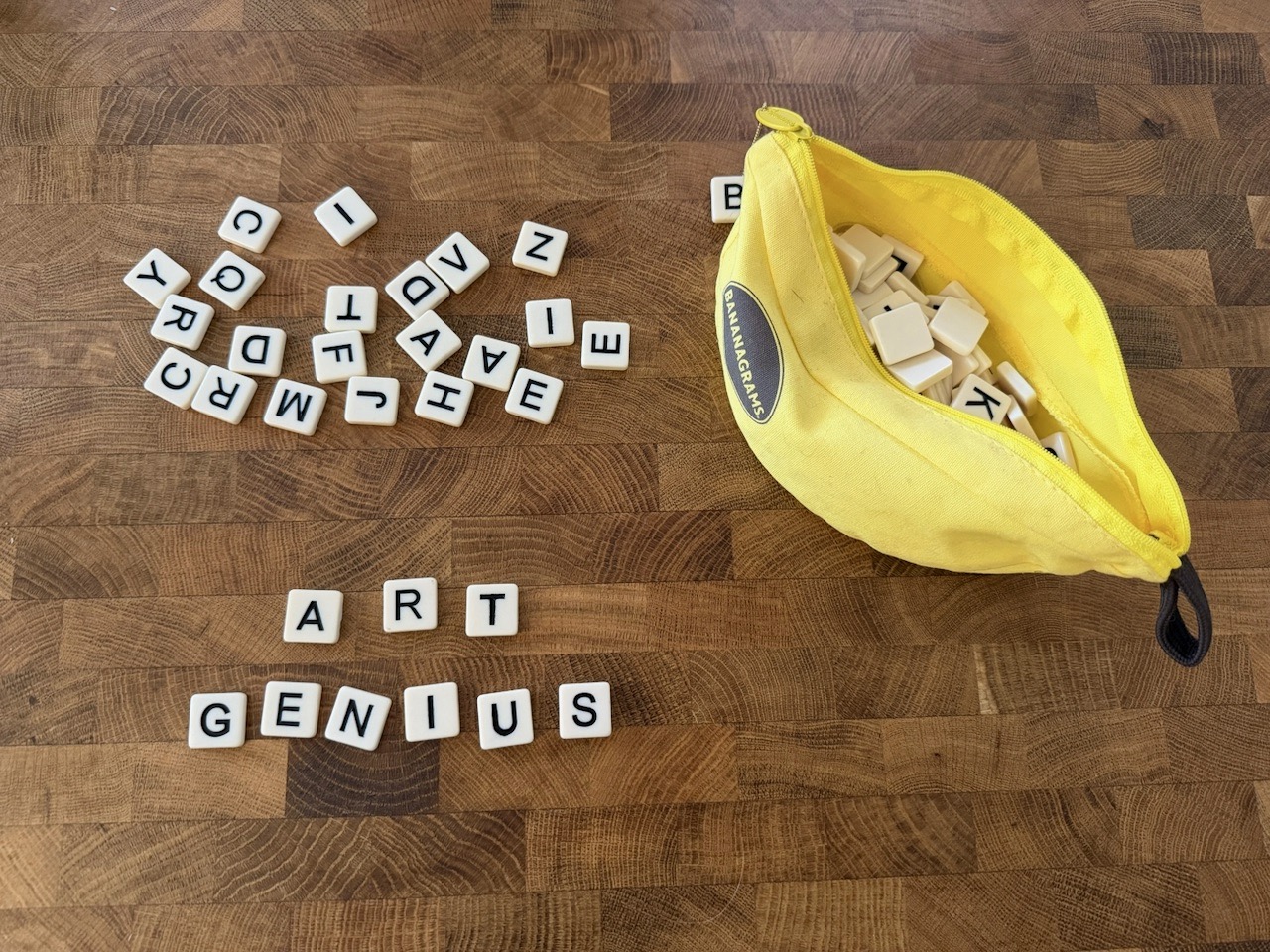
Using letters tiles to work through anagrams
Wouldn’t it be great if I could take these tiles with me anywhere? Plus, if the tiles were digital, you could add more ways to visualize and play with them.
It seemed I’d found my app idea. An anagram workspace checked all my boxes: it solved a problem I actually had, it would be fun to build and cheap to host (no need for user accounts or data storage), and there was a genuine need to be filled in the cryptic crossword community (albeit, a niche one!).
Anagramic is born
So, I set off making Anagramic, an anagram workspace that helps you solve anagrams visually, so you don’t have to resort to using a solver.
The app (mobile-friendly website, really) is simple. You enter the letters you want to visualize, and it offers four tools to help you find the anagram:
- Freeform - most similar to just tiles on a table, letting you drag them around however you want with no limits.
- Line - restricts the letters to a straight line, allowing you to drag to change the order. If you like Scrabble, this may be the most familiar way for you to manipulate letters.
- Wheel - One tip to solving anagrams is to write the letters in a circle on a piece of paper. The Wheel tool lets you do just that. If you like the New York Times game Spelling Bee, you may favor this tool.
- Floating - This tool simply puts the letters in a box and has them float around randomly, bouncing off the walls. No user input here, just watch for a while and see if the answer pops out to you.
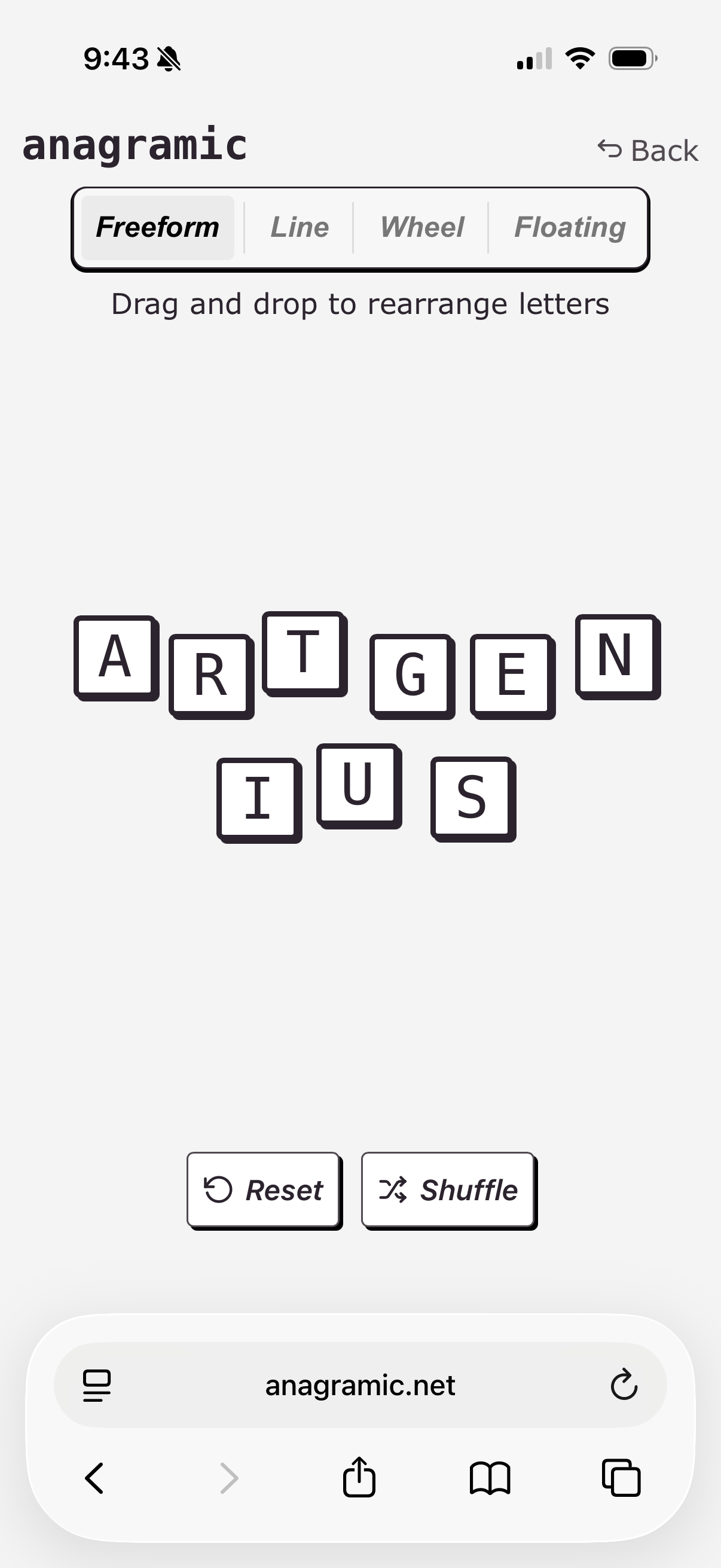
Freeform tool
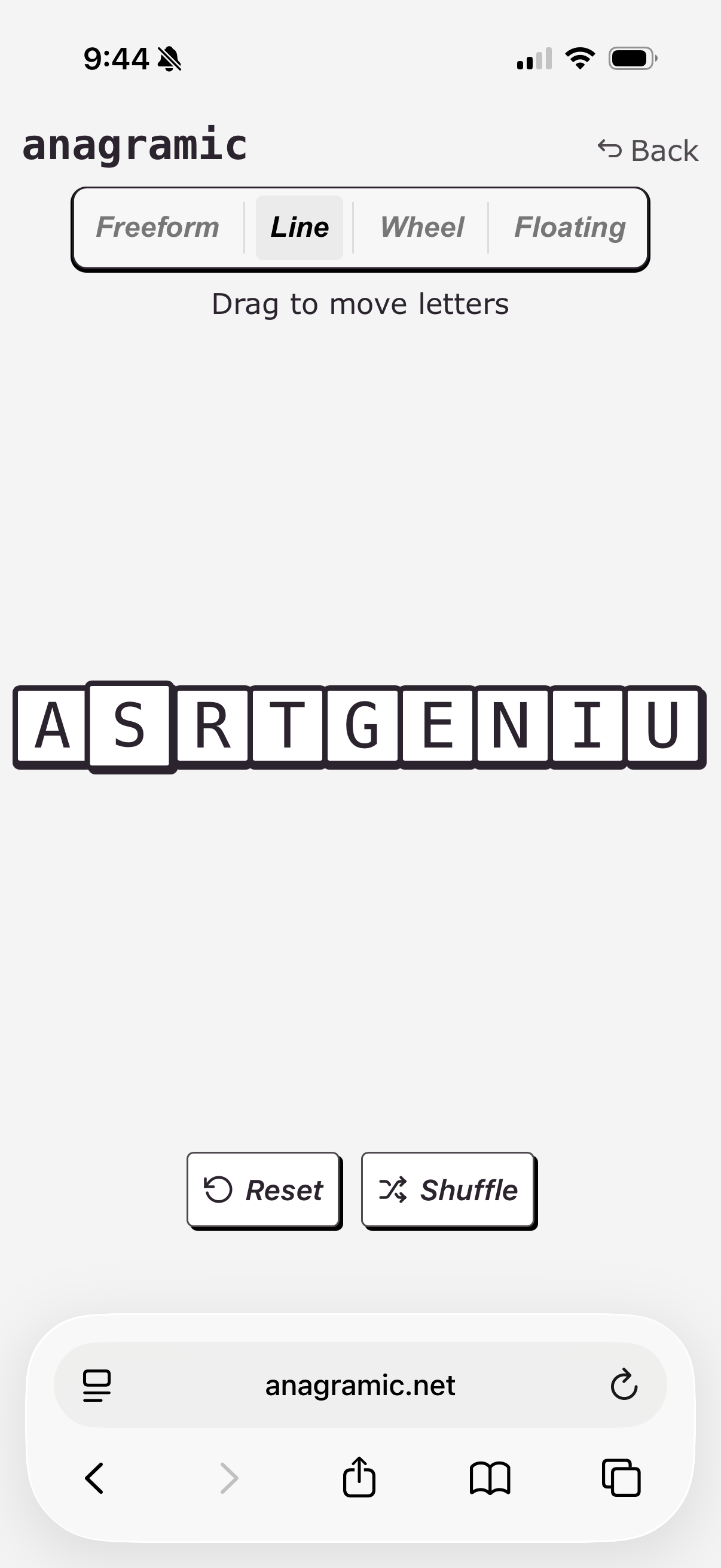
Line tool
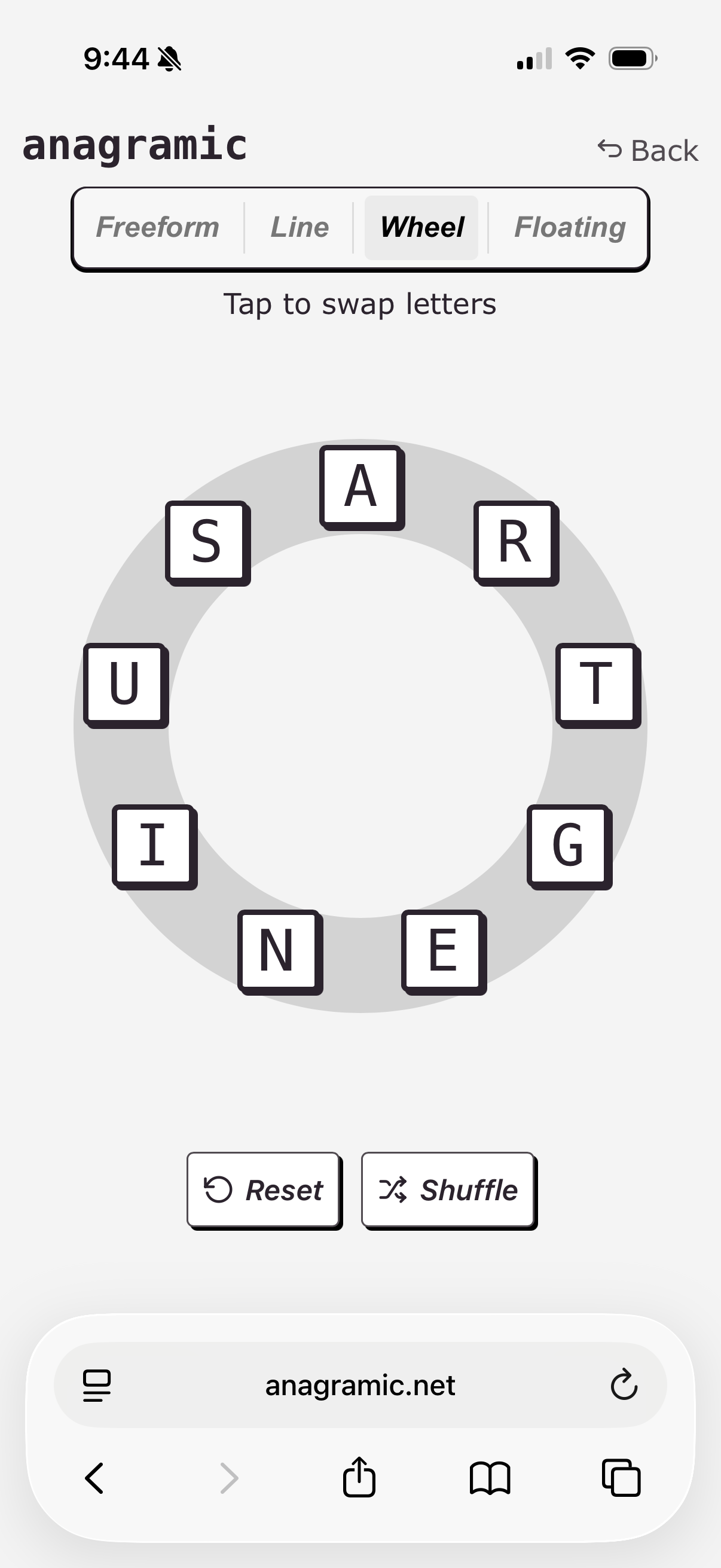
Wheel tool
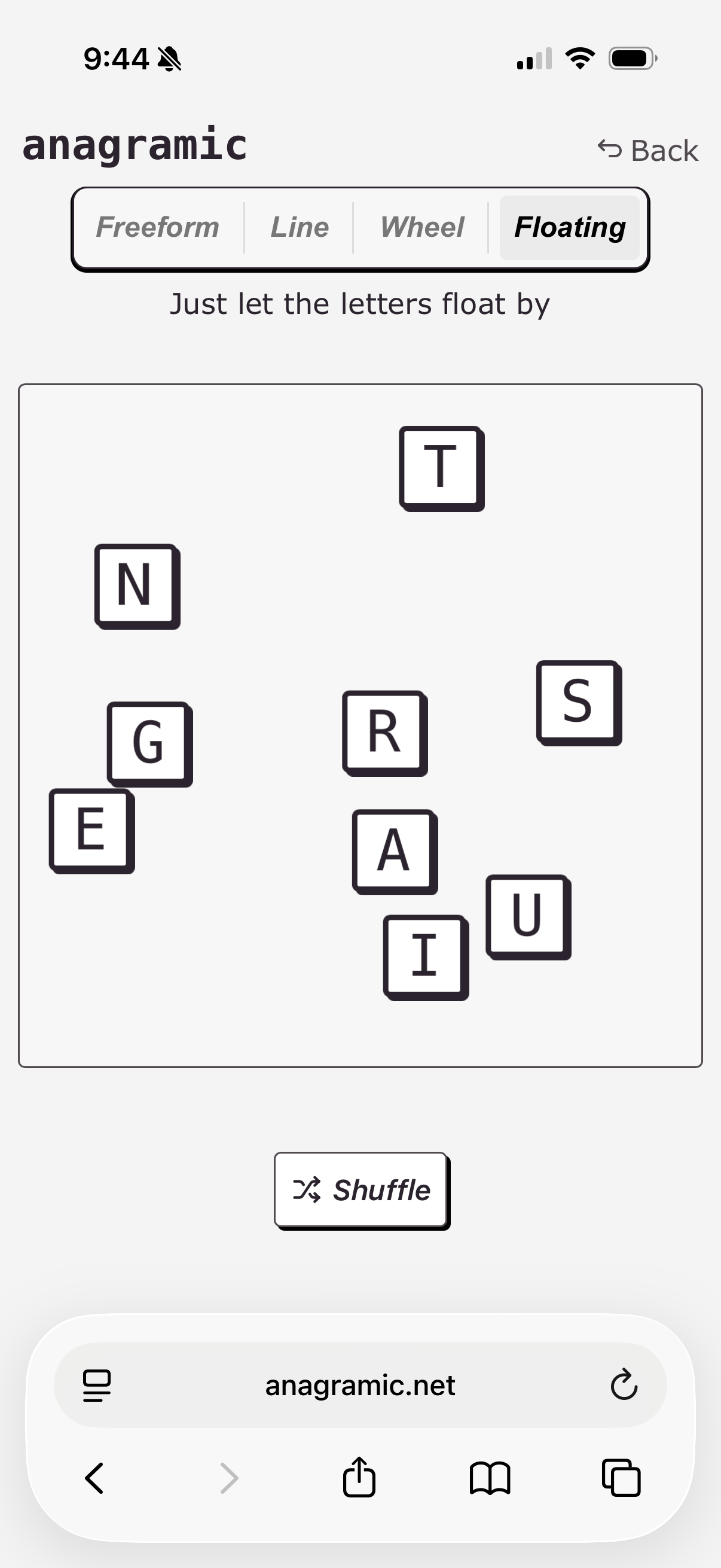
Floating tool
Before too long, I was using it to help find anagrams while solving real cryptic clues. And after some playing around, polishing, and getting feedback from friends, I decided that the app was useful enough to launch.
Next question: How do you launch an extremely niche crossword utility app?
I’m doing marketing now?
When most of your career is in corporate life, you don’t need to worry about how your work gets into the hands of users. You build it, and then it’s someone else’s problem. No such luck, however, when you’re building on your own!
I first tried posting about it to some crossword communities online, to a positive but relatively small reception – not enough to feel like I’d really gotten the word out to the people who I wanted to.
I also shared it within Minute Cryptic’s internal member forum, and sent them a note directly. I made this whole app to help with their game, after all.
Go where the community already is
Where I ultimately found some traction was where Minute Cryptic itself all began: on TikTok! One of Minute Cryptic’s main draws is a daily clue explainer. Each day, their founder breaks down the daily clue in an easy-to-understand video format. These videos were how I stumbled on the game myself.
So, I did something I’d never done before: I made a TikTok with my face in it! I’ll admit, I felt more than a bit hokey at the time. And I learned firsthand how utterly inscrutable the TikTok video editor is to anyone over the age of 25. But, after several takes, edits, and voice overs, I had myself a quick video explaining the problem, my solution, and where to find it.
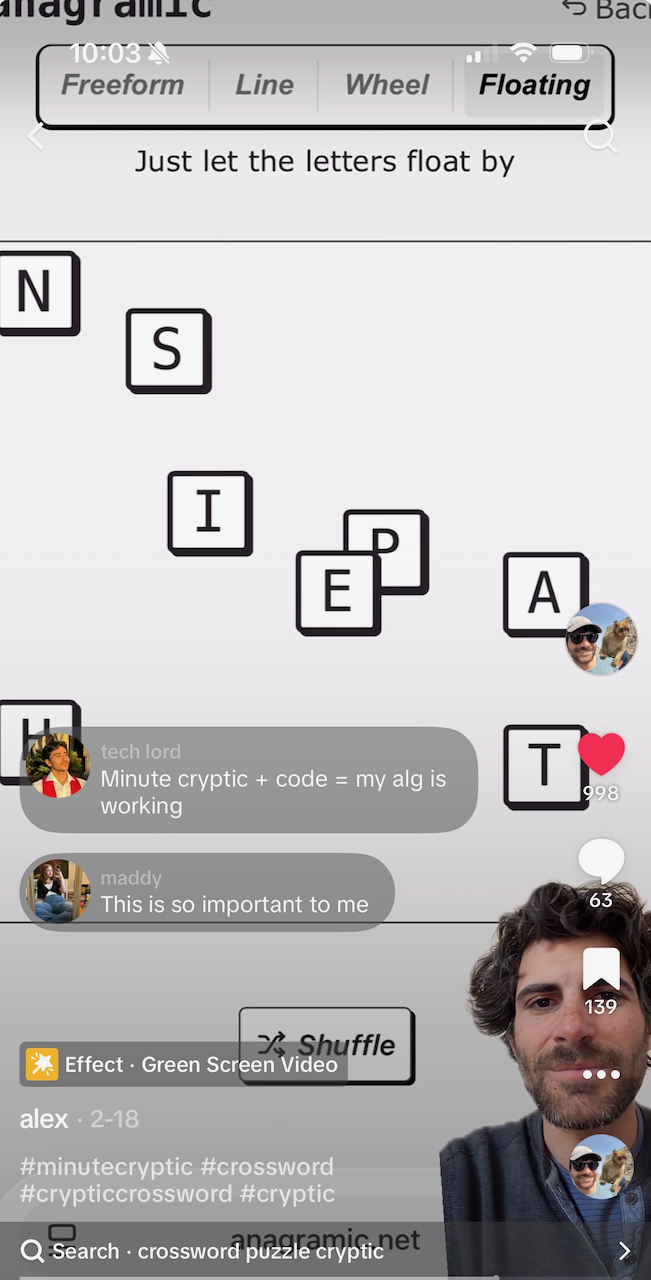
Would you believe this one minute video took me over an hour to make?
The reaction blew my previous marketing attempts out of the water. Say what you will about algorithmic video platforms, but they are certainly good at putting your video in front of the right people. Within a few hours, I had thousands of views and dozens of comments from people who’d had exactly the same problem, and were more than a little excited someone had gone out of their way to solve it.
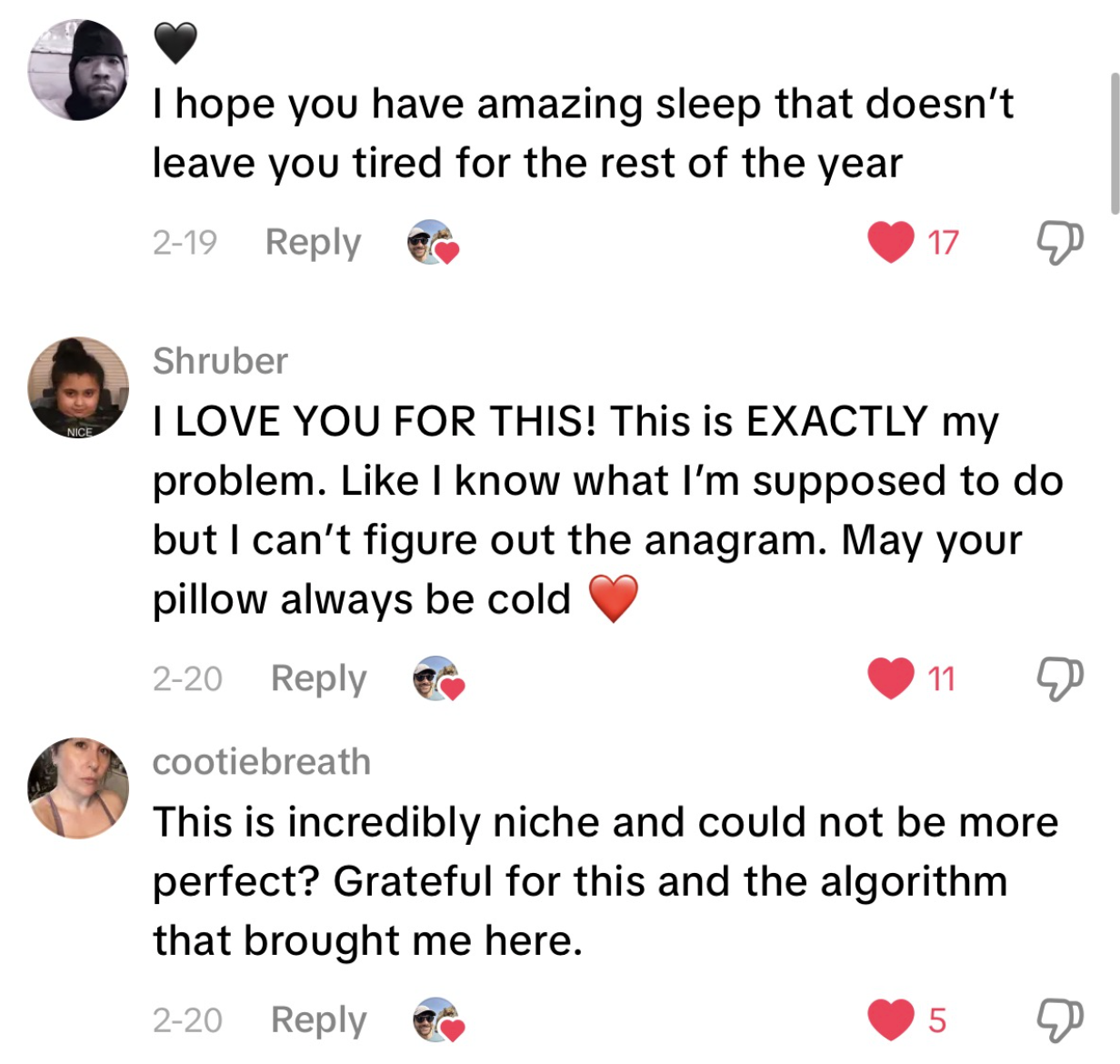
People are pretty happy when you solve their hyper-niche problem
So, mission accomplished! I made a thing, shared it with the world, and got some positive feedback and real users. Not a bad run for a simple hobby project I made in a few weeks!
But, the most fun part of the saga was actually still to come…
A surprising development
A week or so after I’d posted my TikTok and more or less called my app finished, I got an intriguing email from the team at Minute Cryptic themselves.
They’d checked out Anagramic after I shared it with them, and let me know that they’d been toying around with the idea of a “scratch pad” space within Minute Cryptic for a long time. Anagramic had helped spark some ideas internally, and they had now built a prototype of the feature, which they called the “Scribble Space” within the app. They even sent me a link to a pre-alpha version of the app where I could play with it myself, inviting me to be a very early tester.
How cool! My little app, which I honestly barely expected anyone besides me to use, had inspired a whole feature in the daily game that I built it for. I was keen to check out their prototype, which shared a bit of DNA with Anagramic (namely, draggable letter tiles), while still feeling like a distinct tool on its own. It has a few nice features like the ability to add letters to the space directly from the clue itself, and a “staging area” where you can drag tiles if you want to lock them into the answer.
And a few weeks later, as I was watching the daily clue explanation, I found a pleasant surprise waiting for me.
I got a shout-out from Minute Cryptic upon the launch of their Scribble Space feature
Feel free to watch for yourself, but in summary: the Scribble Space launched and I got a very kind shout-out for helping inspire the feature. I have to say, it was quite a surreal moment to watch someone who you’ve been watching daily for over a year mention you and your app by name!
Their founder, Angas (the guy in the video), and I had some additional correspondence, and there may be some merch coming my way as a token of appreciation for helping inspire the idea.
(And by the way, the “abstract art genius” clue I used as an example is the same one they used to launch the Scribble Space).
Ending thoughts
When I’ve told friends and family about this whole experience, some have given a reaction along the lines of: “Wait, you’re letting them use your idea for free?”. I understand the sentiment and know it comes from a good place, but I look at the situation from a different perspective.
The goal of this project was always to something fun and useful, share it with the right people, and make the world a tiny bit better in the process.
And it turns out, when you do that, good things follow. In the end, I built and shared an app I genuinely wanted to exist, my favorite word game got a huge upgrade inspired by my personal workflow, and I got a cool connection, a public shout-out, and some free merch to boot!
To me, that all feels more valuable than whatever I may have gained if I’d tried to monetize my hobby project. Puzzles and games should be fun, after all.
You can find Anagramic for free at https://anagramic.net. If you want to look at how it was made, it’s open source on Github.